Aviation
Sri Lanka Flies Its First Passenger Drone at Colombo Port CitySri Lanka Flies Its First Passenger Drone
A two-seat, electric EHang aircraft carried the Minister of Ports and Civil Aviation on its first official flight, opening a six-month trial that could lead to air taxis for tourists and emergency services.

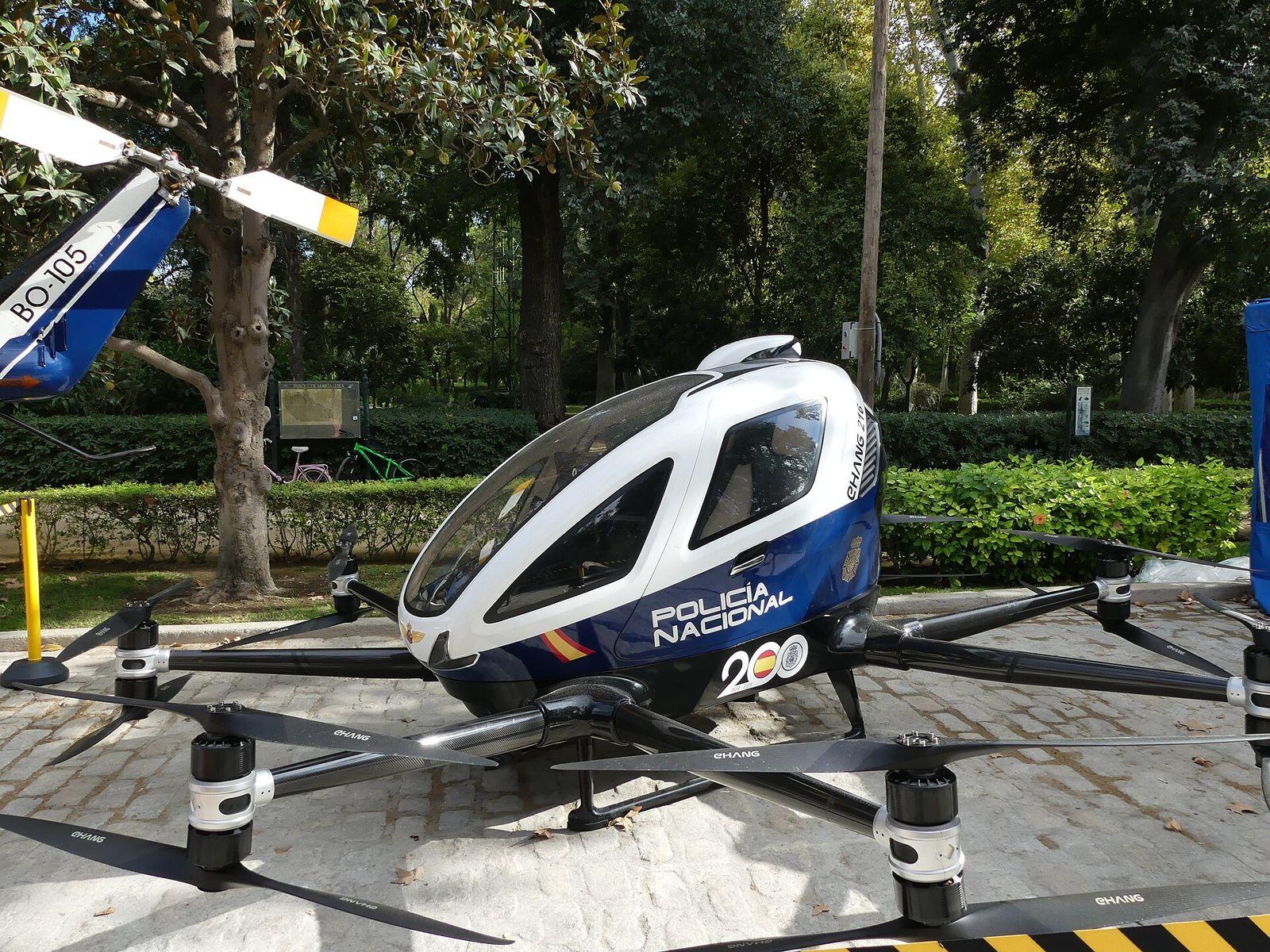
Sri Lanka took its first step towards passenger air taxis on Wednesday, when an electric, remotely operated aircraft lifted off at Colombo Port City carrying a government minister on its first official flight.
Anura Karunathilaka, the Minister of Ports and Civil Aviation, rode in the aircraft during the trial, the first of its kind in the country. The flight marks the start of a testing period expected to last about six months before any decision on commercial services.
The aircraft
The aircraft is an EHang E216, made by the Chinese company EHang and recently imported for the project. It belongs to a class of aircraft known as eVTOLs — electric vertical take-off and landing — which rise and descend straight up and down like a helicopter, so they need no runway.
The E216 carries two passengers. It is driven by 16 propellers mounted on arms around the cabin and powered by 12 battery packs, and it has three separate flight control systems. There is no pilot on board: the aircraft is computer-controlled and monitored remotely from a central control station. It is designed to activate automatic safety procedures if there is an emergency or if communication with the ground is lost.
Having many small, electrically driven rotors is central to the design's safety case. If one rotor or motor fails, the others can keep the aircraft stable — a level of redundancy that a conventional helicopter, with its single main rotor, cannot offer.
How the trial came about
The project was first discussed at the Ministry of Ports and Civil Aviation in August. Because it involves a new kind of aircraft operating in the country's airspace, it has required coordination between the Civil Aviation Authority of Sri Lanka, the Ministry of Defence and the Sri Lanka Air Force. Test flights took place at Port City in the days before Wednesday's official demonstration.
The trial is being held at Colombo Port City, built on land reclaimed from the sea next to the capital's business district, whose open, newly built spaces lie away from the dense streets of the older city.
What it could be used for
Officials have set out several possible uses. The most eye-catching is tourism: aerial links between major attractions, such as the rock fortress of Sigiriya and neighbouring Pidurangala, and to islands off the coast. Sri Lanka is heading into its busiest tourist season after a record October for visitor arrivals, and the government is keen to offer new experiences to high-spending travellers.
Other uses under study are more practical. Small, vertical-lift aircraft could carry patients in medical emergencies, support disaster response when roads are cut by floods or landslides, and deliver essential supplies to places that are hard to reach. In a country where heavy monsoon rains regularly isolate communities, those uses may ultimately matter more than sightseeing.
What a flight is like
For passengers, an aircraft of this kind is closer to an automated shuttle than to a conventional flight. There are no controls in the cabin for passengers to operate. Flights follow pre-planned routes and are supervised from the ground, where operators monitor the aircraft's systems, position and the weather throughout the journey.
Because the rotors are driven by electric motors, the aircraft is markedly quieter than a helicopter of similar size, and it produces no exhaust in flight. Those qualities are part of the case for using such aircraft close to hotels, resorts and heritage sites, where noise and pollution matter.
The questions still to answer
A successful demonstration is only the beginning. Before any commercial service could start, regulators will need to be satisfied on a long list of issues: how the aircraft are certified and maintained, how they are kept apart from other air traffic, where they can take off and land, how weather limits are set, how passengers are insured, and how operators respond if something goes wrong.
Batteries are another constraint. Electric aircraft of this size have limited range compared with helicopters, which shapes the kinds of routes they can fly and how many charging points are needed. The six-month trial is expected to generate the data on reliability, noise, weather performance and operating costs that regulators and potential operators will need.
Cost will also decide whether air taxis become more than a novelty. Early services elsewhere have been aimed at tourists and premium customers. Whether such flights can be offered at prices that make sense for wider use in Sri Lanka remains to be seen.
A global race for urban air mobility
Sri Lanka joins a growing list of countries experimenting with what the industry calls urban air mobility. EHang's two-seat EH216-S became the first pilotless passenger aircraft of its kind to receive a type certificate from China's civil aviation regulator, in October 2023, and the company has since been working towards commercial sightseeing services in China. Other manufacturers in the United States, Europe and Asia are developing their own eVTOL designs, many of them with a pilot on board.
For a country of Sri Lanka's size, the attraction is clear: short hops over congested roads and difficult terrain, using aircraft that are quieter and cheaper to run than helicopters and that produce no emissions in flight. If the trial goes well, and if regulators are satisfied, Wednesday's flight may be remembered as the first chapter of a new kind of transport on the island.
What happens next
Testing will continue at Colombo Port City for about six months. Officials have described the project as a pilot initiative rather than a commercial operation at this stage. Any move towards public services would require further approvals from the Civil Aviation Authority and the other agencies involved.